Scarlett Yang's work makes perceptible the processes that usually escape attention: biological decay, climatic change, computational drift.
The work takes form as bio-sculpture, computational data models, moving image and sensory spatial installation, developed independently and through commissions from museums, galleries and research institutions.

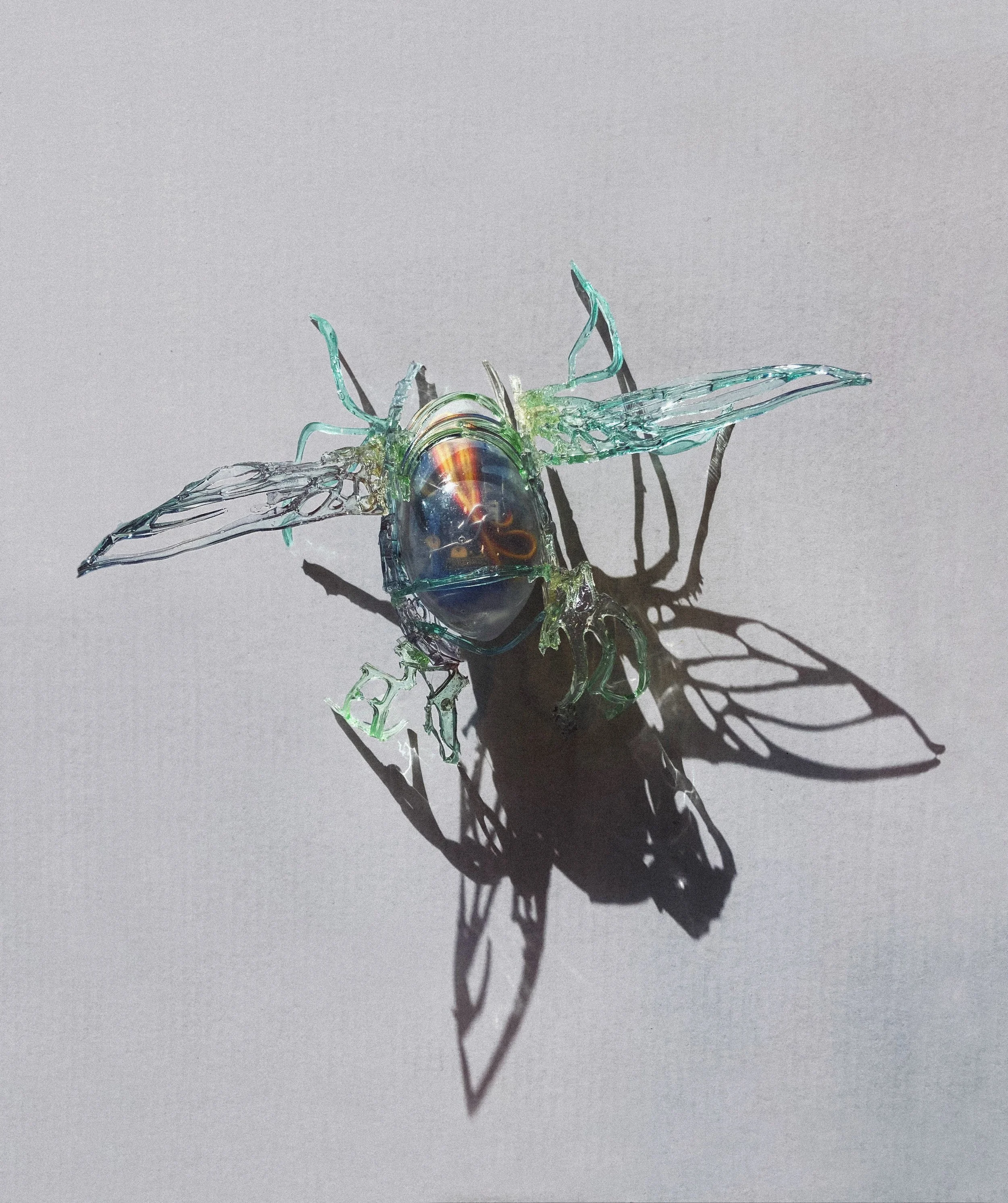
Recursive Materiality (2023)
Commissioned by Vancouver Art Gallery
Autonomous robotic units, biomaterial liquid
A swarm of sculptural robotic insects deposits biomaterial filaments from its tail as it moves, each unit responding only to its nearest neighbours; the resulting woven net emerges with no single unit authoring it.
The work uses the swarm as a live model for asking where decision-making actually resides in a generative system: the individual unit, or only the aggregate pattern, a question equally at home in a flock, a network node, or a knot in a knitted surface.
The insects' translucent shells expose their own electronics as visible organs, withholding the resolution biomimicry usually offers: nature and artifice left in open contradiction, not resolved into resemblance.
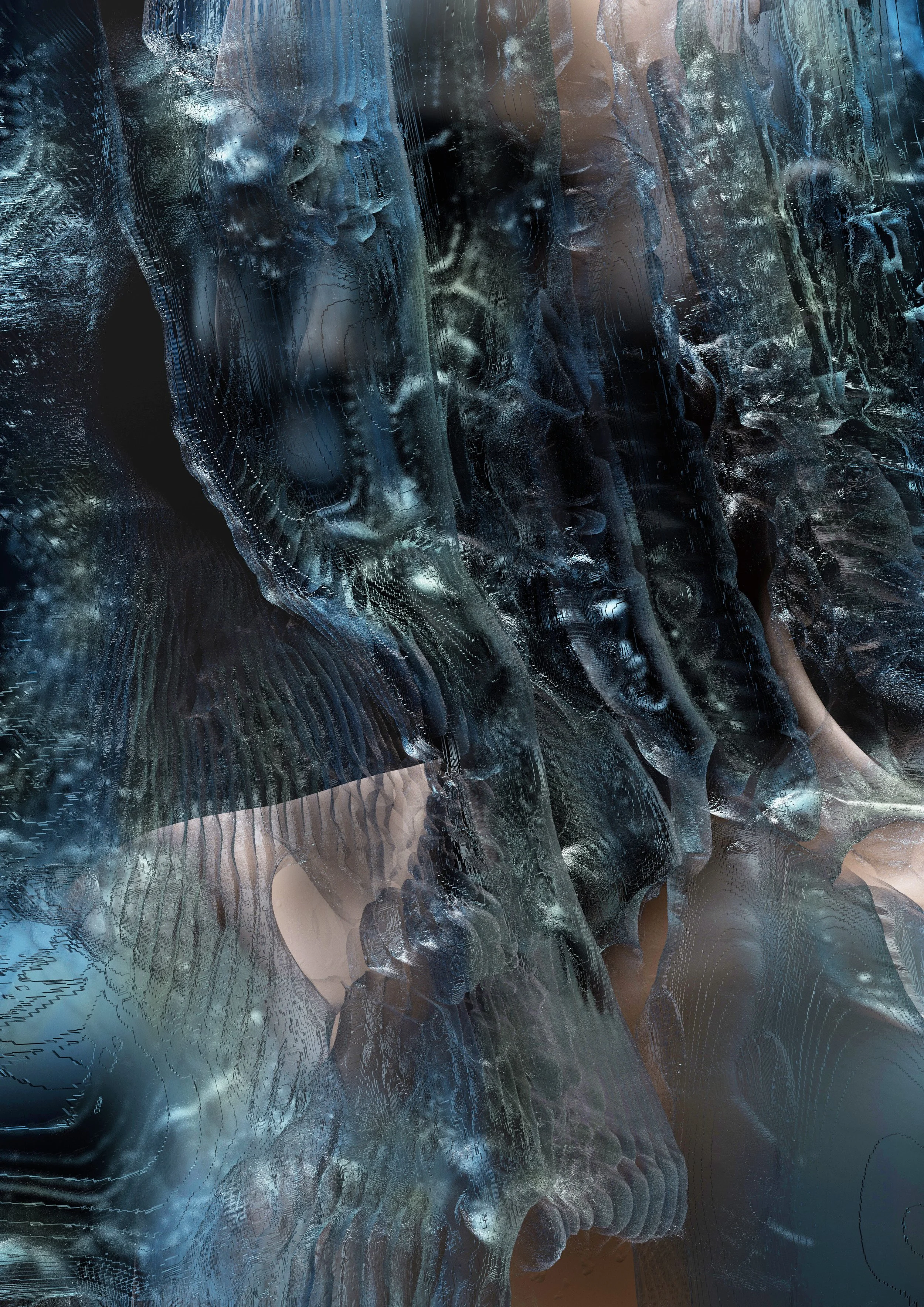
Adaptive Skins (2024)
Commissioned by NOWNESS
Digital moving image, infinite duration, interactive weather-algorithm trigger
"Skin" is used for its double meaning: a video game character's clothing and the body's own organ, reimagined here as a biomaterial interface.
Fictional temperature, pH, humidity, cloud-particle, and wind data drive the skin's pattern, opacity, roughness, and reflectivity in real time, each shift triggering a consequence for the digital character wearing it.
Skin's biological function is negotiated against genuine risk before being transplanted into a body that carries none, its protection restaged for a body that was never exposed to begin with.
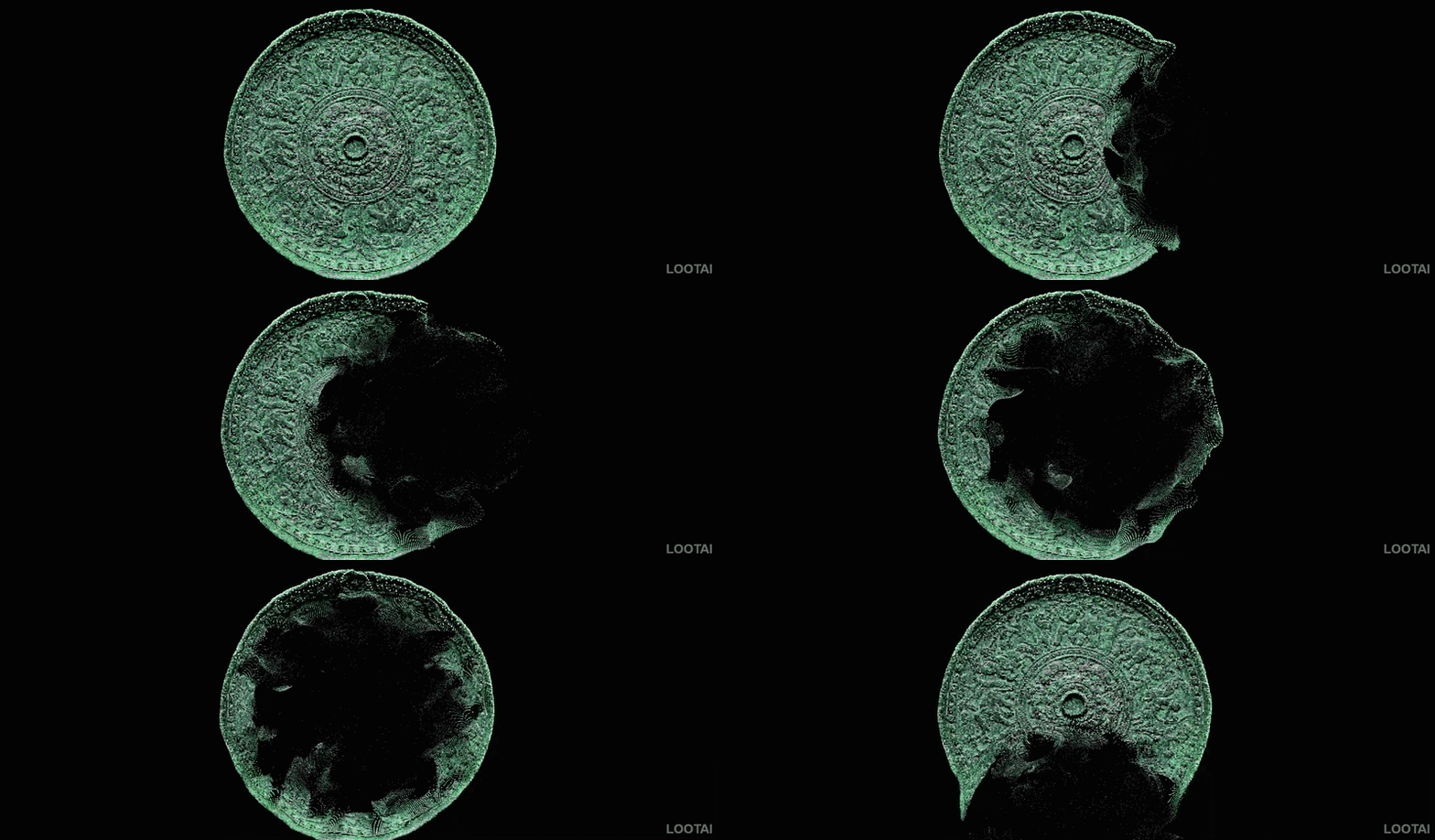
Premium Stuff (2026 - )
Commissioned by Thyssen-Bornemisza Museum & TBA21
digital museum artefact database, interactive web system
This research project asks what decay means for computational and artificial systems once they enter a museum's custodial logic, against institutions' standing promise of indefinite preservation.
Biological decay is gradual and visible while digital failure is not. Files corrupt, codecs deprecate, dependencies go unmaintained, often without warning.
The research prototypes ask whether such temporal failure can be modelled predictively, reframing decay as an infrastructural problem rather than a biological metaphor.
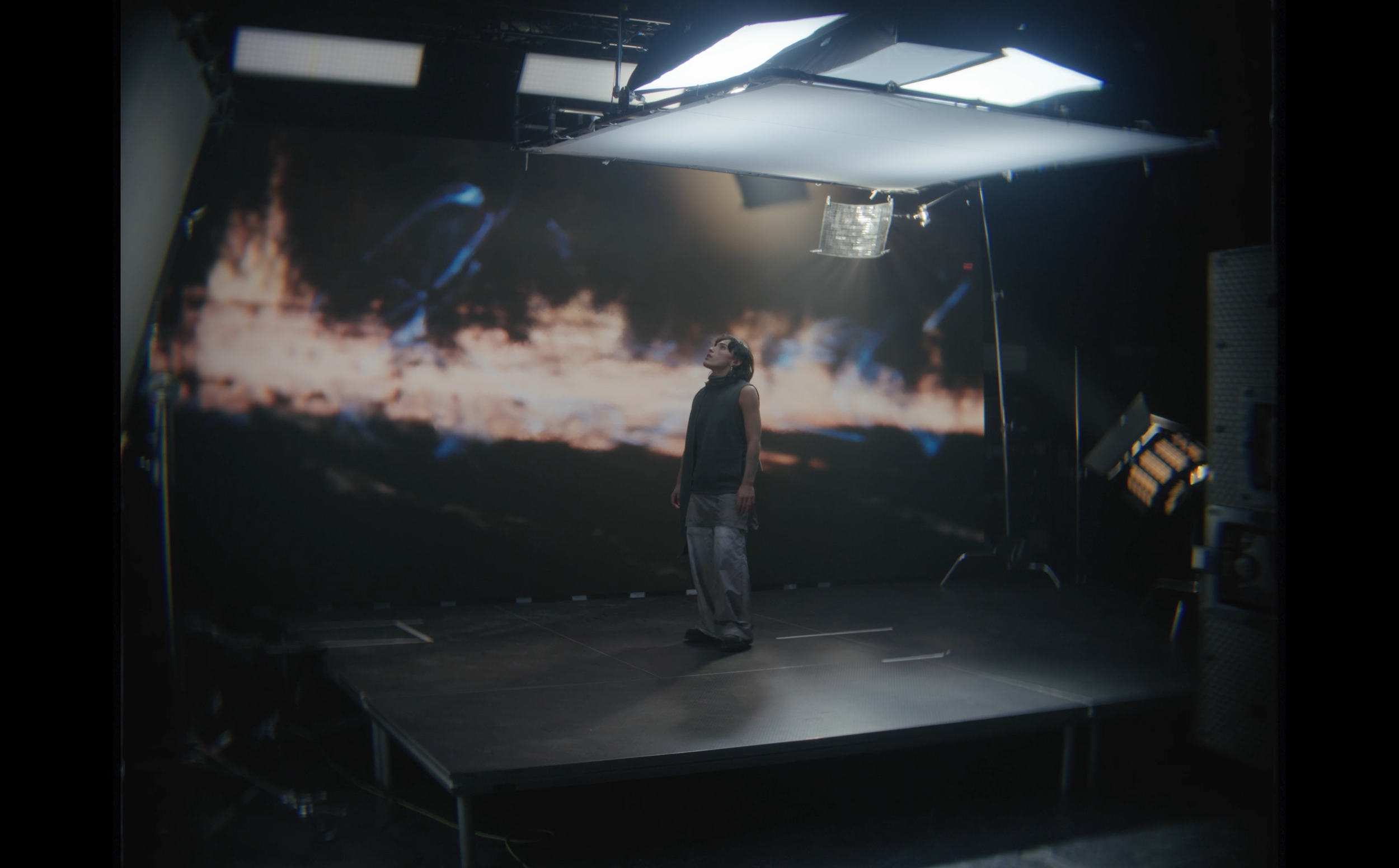

An Echo From Above (2025 - )
Micro film duration 04:00, Unreal Engine playable world game
Created using virtual production, live-action filmmaking and 3D real-time worldbuilding, this short film follows a scientist surveying extreme future climates in search of ecological remnants from the 21st century. Her body becomes increasingly destabilised as simulated weather systems distort her perception, leading her to realise the entire landscape is an engineered environment.
Through choreography, motion, and digital scenography, the film examines how bodies interpret and misinterpret, digitally mediated climates, and how identity disorients when navigating layered realities.

Drifted Archive - 001 (2026)
Laser Etched Glass panel booklet, computational imagery
Etched onto colorless pages, this research documentation integrates text, scientific diagrams, and 3d spatial maps. Each page investigates a distinct facet of the subject, using verbs, actions, and nouns to visualize, materialize, and interact with abalone shells and their inner nacre.
This project is commissioned by the Design Trust (HK) under a research grant and was first presented at Somerset House, London, as part of the Earth Day program in May.